Most architectural shingle roofs in Southeastern Pennsylvania and northern Delaware last 20 to 30 years, but our weather decides where in that range yours lands. If your roof is past 20, leaks in more than one place, or is shedding granules and curling shingles, start planning a replacement before a winter storm plans it for you.
I get asked some version of this question at almost every inspection: “Do I really need a new roof, or can it go a few more years?” The honest answer depends on the roof, not the calendar. But our climate does put a predictable kind of wear on roofs across Chester, Delaware, Montgomery, and Bucks Counties and New Castle County, and once you know what to look for, you can usually tell where yours stands long before water shows up on a ceiling.
What our weather does to a roof, season by season
We don’t get the heaviest snow in the country or the strongest hurricanes. What we get is variety: a roof here goes through cold, wet winters and hot, humid summers every year, with storms of every kind in between. Each season wears on a different part of the roof.
Winter: freeze-thaw cycles and ice dams
Philadelphia International Airport averages about 23 inches of snow a year, and colder spots to the north and west usually see more. The snow itself isn’t the main problem. The problem is that our winters swing above and below freezing over and over. Water gets into small gaps around flashing and nail heads, freezes, expands, and opens those gaps a little wider each time.
The same swings create ice dams. Heat escaping from the house melts snow on the upper roof, the meltwater runs down to the cold eaves, and it refreezes into a ridge of ice. Water then backs up behind that ice and under the shingles, where shingles were never meant to shed water. That’s why building codes call for an ice barrier at the eaves in areas with a history of ice damming, running from the edge of the roof to at least 24 inches inside the exterior wall.
Late fall through spring: nor’easters
Nor’easters bring hours of wind-driven rain or heavy, wet snow, with gusts strong enough to lift shingle edges. In March 2018 our region took four nor’easters in a single month. Wind-driven rain finds weak flashing, and a shingle whose seal has already been broken by an earlier storm is the first to go in the next one.
Summer: heat, humidity, and thunderstorms
Our summers are hot and muggy, with average July dew points in the mid-60s. On a sunny day a dark roof gets far hotter than the air, and a poorly ventilated attic traps that heat and moisture under the deck. Over years, that bakes the shingles from underneath, dries out the asphalt, and can leave the plywood soft and delaminated.
Summer is also thunderstorm season. Philadelphia averages roughly 27 thunderstorm days a year, most of them in June, July, and August. Strong outflow winds lift shingles, and the occasional hailstorm knocks off the granules that protect the asphalt from the sun.
Late summer and fall: tropical remnants and falling leaves
We’re far enough inland that hurricanes rarely arrive at full strength, but their remnants still do damage here. On August 4, 2020, Isaias produced an EF2 tornado that tracked about 20 miles from Northeast Philadelphia to Doylestown, and another EF2 from Dover into New Castle County. On September 1, 2021, the remains of Ida spawned an EF2 tornado with winds near 130 mph from Fort Washington to Horsham. Those are the headline storms. The quieter fall problem is leaves: they fill gutters and valleys, hold water against the roof edge, and set up ice dams once winter arrives.
How long a roof really lasts here
Architectural shingles, the thicker, dimensional shingles on most homes built or re-roofed in the last twenty-plus years, usually last 20 to 30 years in our area. Older three-tab roofs often wear out sooner. Where a given roof lands in that range comes down to a few things:
- Ventilation. A roof over a hot, damp attic ages faster than the same shingle over a well-vented one.
- Exposure. South- and west-facing slopes take the most sun and usually wear first. Shaded slopes stay damp and grow moss and algae.
- Installation. Too few nails, no starter strip at the edges, or reused flashing shorten a roof’s life no matter how good the shingle is.
- Storm history. Hail and wind damage that never leaked can still take years off a roof.
So age is a reason to look closely, not a verdict. I’ve seen 25-year-old roofs with plenty of life left and 12-year-old roofs that were done, almost always because of ventilation or installation.
Signs your roof is near the end
You can spot most of these from the ground, from the gutters, or from the attic with a flashlight. Please don’t climb onto the roof to check: a worn roof is a slippery one.
- Granules in the gutters or at the bottom of downspouts. Some shedding is normal in a new roof’s first year. Heavy amounts on an older roof mean the protective layer is wearing away.
- Curling, cupping, or cracked shingles. Edges that turn up or corners that lift are shingles that have lost their flexibility, and wind gets under them easily.
- Bare or shiny spots. Patches where the granules are gone expose the asphalt to the sun, and those patches wear fast.
- Leaks in more than one place, or the same leak coming back. One leak is often flashing. Several usually mean the roof is wearing out as a whole.
- Stains, damp insulation, or daylight in the attic. Look along the underside of the deck after a rain, especially near chimneys, vents, and valleys.
- A deck that feels soft or looks wavy. Sagging between rafters often means the plywood underneath has taken on water.
- Neighbors re-roofing. Homes in the same development were often roofed by the same builder in the same year. When the houses around you are getting new roofs, yours is likely close.
Dark streaks on the shingles are worth a note too, but they’re usually algae and mostly cosmetic. On their own, they’re not a reason to replace a roof.
Repair or replace: how to decide
A repair is the right call when the damage is in one area and the rest of the roof is sound: a few shingles torn off in a storm, a failed pipe collar, or flashing that’s come loose at a chimney. There’s no reason to replace a healthy 10-year-old roof because of one bad spot.
Replacement starts to make more sense when:
- Problems show up on several slopes rather than one area.
- The roof is past about 20 years and showing the signs above.
- Repairs keep coming back, so you’re paying for the same roof again and again.
- The deck under the shingles has started to fail.
- Matching new shingles to old, weathered ones would leave an obvious patch, and you’re planning to sell.
Whatever we recommend, you should see the photos behind it. A good inspection covers every slope, the flashing, the vents, the gutters, and the attic where we can reach it, not just the spot that’s dripping.
What a full replacement should include in our climate
Two bids for “a new roof” can describe very different jobs. The shingle on top gets most of the attention, but what keeps water out through a Pennsylvania winter is mostly underneath it. Here’s what our roofing system includes, and what we’d suggest looking for on any scope:
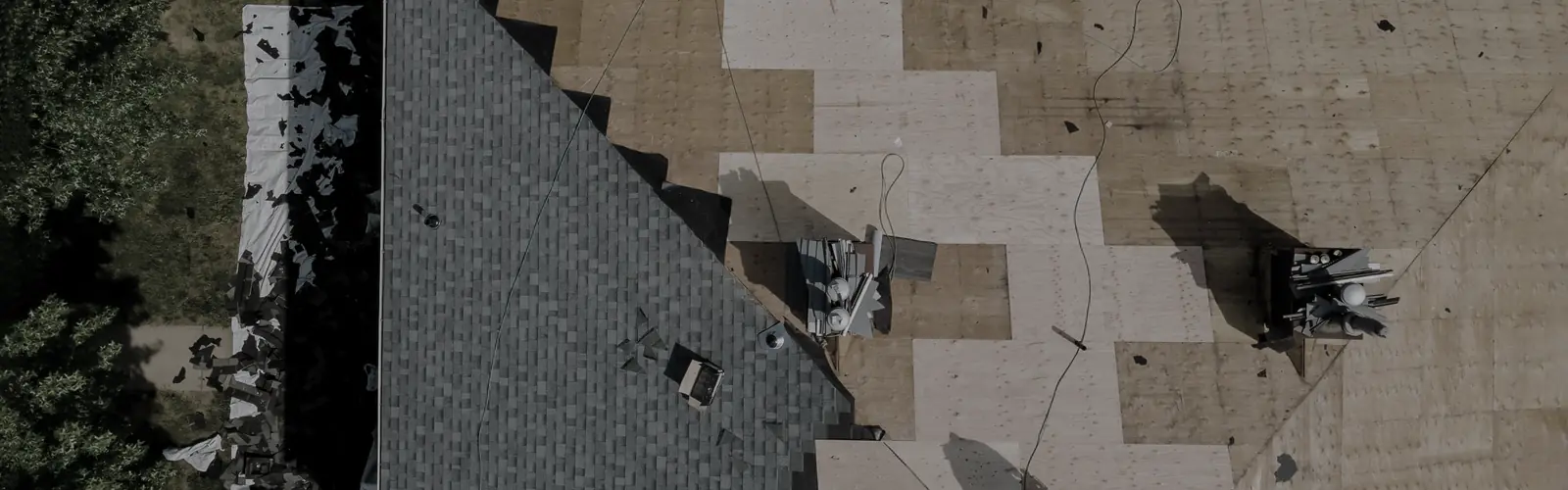
- A full tear-off to the deck. Building codes can allow a second layer of shingles over the first in some cases, but layering hides the deck. We remove up to two layers so the wood can be inspected, and if we find rot, we stop and show you before replacing it.
- Drip edge on every eave and rake. Metal at the edges keeps water off the fascia and supports the first course of shingles.
- Ice and water shield where roofs leak first. A self-sealing membrane at the eaves, valleys, and around chimneys, vents, and skylights. In our climate, this is the layer that stops ice-dam water.
- Synthetic underlayment over the rest of the deck, as a second line of defense under the shingles.
- Starter strip at the edges and the right nailing pattern. Every shingle is nailed to the manufacturer’s instructions, with starter strip at the eaves and rakes. That matters on the day a nor’easter tests the edges.
- New flashing, not reused. Every pipe, vent, and skylight gets a new collar or flashing, and wide chimneys get a cricket to split the water around them.
- Balanced attic ventilation, so summer heat and winter moisture can get out instead of cooking the shingles and rotting the deck.
We install GAF shingles, from Timberline HDZ through the Designer lines. As a GAF Certified Plus contractor, we can register qualifying roofs for GAF’s enhanced warranties, and the warranty is registered in your name when the job is done.
The best time of year to replace a roof here
Spring and fall are the most comfortable seasons for a re-roof in our area: mild temperatures, lower humidity, and fewer afternoon thunderstorms. They’re also the busiest, so it pays to plan ahead if you’ve seen the signs.
Summer works well too. Crews start early to get ahead of the heat, and the warm weather helps new shingles seal quickly. The main thing to plan around is afternoon thunderstorms.
Winter installs are possible, with care. Shingles have a factory sealant strip that needs warmth and sun, above about 40°F, to bond. On colder days, shingles can be hand-sealed with roofing cement, and the strips finish sealing when warmer weather arrives. If your roof is actively leaking in January, waiting until April isn’t always the right answer.
In any season, one rule shouldn’t bend: a crew should never tear off more roof than it can dry in the same day. We don’t.
Planning and paperwork in Pennsylvania and Delaware
A roof replacement is a large purchase, and both states have rules that protect you. A few things worth knowing before you sign:
- Registration. Pennsylvania requires most home improvement contractors to register with the Attorney General, and the PA HIC number has to appear on contracts, estimates, and ads. You can check a contractor through the Pennsylvania Attorney General’s home improvement contractor registration page.
- Delaware licensing. Contractors working in unincorporated New Castle County need a county contractor license in addition to a State of Delaware business license. Ask for the license number.
- A written contract. In Pennsylvania, a home improvement contract has to be in writing and signed, and you have three business days after signing to cancel without penalty.
- Deposits. Pennsylvania law generally limits the deposit to one-third of the contract price, plus the cost of any special-order materials listed in the contract.
- Permits. Many townships require a permit for a re-roof. We handle the permits, and they’re included in the price.
Most of our replacement projects are scheduled within about a week of signing, weather permitting, and the installation itself usually takes one day, two for larger or steeper roofs. You’ll find the full sequence, from inspection to warranty registration, on how a job runs.
Questions homeowners ask
How long does a roof replacement take?
Most homes take one day, and larger or steeper roofs take two. The roof is dried in at the end of every workday, so your house is never left open overnight.
Can new shingles go over my old roof?
Code allows a second layer in some cases, but we tear off to the deck. Layering hides rot, adds weight, and keeps the new shingles from lying flat, and it can shorten the life of the new roof.
Do I need to be home during the work?
No, as long as we can reach the outside of the house and an outlet if we need one. We’ll walk the finished roof with you, or send photos if you can’t be there.
What happens if it rains during the job?
We watch the forecast closely and only open as much roof as we can cover that day. If a storm comes up, the crew covers the exposed area with underlayment and tarps before it arrives.
Is a free roof inspection really free?
Yes. We inspect the roof, take photos, and give you a written scope, with no obligation. Book a free roof inspection.